Yips Drivers Of Globalisation Tesco
Disclaimer: This work has been submitted by a student. This is not an example of the work produced by our Essay Writing Service. You can view samples of our professional work here.
Feb 3, 2018 - Transcript of Tesco Case. TESCO CASE AGENDA YIP's Globalisation Drivers Factors for the success/failure of TESCO in Asia Fresh & Easy in.
Any opinions, findings, conclusions or recommendations expressed in this material are those of the authors and do not necessarily reflect the views of UK Essays.
This report is set out in order to evaluate the marketing strategy adopted by Tesco along with how they gain a competitive position internationally through globalisation. Under the findings of this report the approach which will be evaluated will be related to Porter’s competitive positioning. This will be used to show how Tesco gain a competitive advantage over their rivals such as Asda using the generic strategy. The five force framework will also be investigated to anaylse the competition it faces and finally how Tesco segments there market, identifying the gaps available to develop.
In order to write this report a collection of different sources were used. These sources included books, journal articles, media articles, websites, Tesco’s annual reports and information from Tesco’s website. The information gained from these sources helped to discover how Tesco manages to gain the competitive advantage in their industry. It has also helped to focus the importance of successful competitive positioning with models from Porter to establish the position in the minds of the consumer.
1.0 Introduction
This report includes a theoretical model which will reflect the practice of Tesco in relation to strategic analysis. It will look at the competitive positioning approach and the models/concepts used by Porter to gain a competitive advantage over Tesco’s rivals. By doing this it will show what other companies in the industry would need to do in order to take over the competitive advantage that Tesco have.
Strategy is based on the long term of a business and is the direction and scope of the organisation. It aims to achieve advantage in a changing environment through its configuration of resources and competences (Johnson et al, 2008).
There are generally three different levels of strategies associated with organisations. The top level is known as the corporate level strategy which is alarmed with the overall purpose and extent of the organisation. The second is the business level strategy which looks at particular markets and how to compete successfully in them and the third level is the operational strategies which look at how the organisation delivers successfully (Johnson et al, 2008).
2.0 Findings
2.1 History of Tesco
Tesco began when Jack Cohen first opened a market stall in the East end of London in 1919 and since then began trading in 1924. This shows that Tesco has been serving customers in the UK for the best part of a century. Today, they class themselves as much more of a weekly shop as they have introduced new services, products and ways to shop all driven by their ‘Every Little Helps’ philosophy (Tesco, 2008).
In the last decade Tesco has grown their business to become the world’s third largest grocery retailer by determining an excellent level of service wherever they operate. They have a strategy for growth which is based in five parts. These include core UK business, non food, international, retail services and the community (Tesco, 2008). Tesco’s market share is still growing just short of 7% although that is not as fast as it was. This is because at present the economy is in a recession and so customers are changing their habits (Leahy,
Get help with your essay today, from our professional essay writers!
Qualified writers in the subject of marketing are ready and waiting to help you with your studies.
Get help with your essay today
from our professional essay writers!
Visit www.ukessays.com to see how we can help you!
2008).
‘According to the Institute of Grocery Distribution (IGD), the UK food industry group predicts that Tesco will grow at a faster rate than Carrefour in the coming four years. Tesco’s growth will be spurred by international expansion in markets such as China, the US and India’ (Hall, 2008). This means that Tesco who are currently the UK’s biggest retailer will leapfrog Carrefour by
2012 to become the second largest retailer in the world after WalMart (Hall,
2008).
Within the UK, Tesco employ over 280,000 employees and have over 2,100 stores. Tesco stores have four different formats (See Appendix 1). These are the express stores which sell a range of up to 7000 products with the first express store opening in 1994. The metro store first opened in 1992 bringing the convenience of Tesco to town and city centre locations. The Tesco superstores began in 1970s and in recent years these stores have been introduced to a number of new nonfood ranges such as DVD’s and books. Finally the Extra stores have been operating from 1997 and offer the widest range of food and nonfood lines. These products range from electrical equipment to homewares, clothing, health and beauty and seasonal items such as garden furniture.
Along with food and nonfood products in different stores, Tesco also offers retailing services (See appendix 2). Tesco Personal Finance (TPF) has the choice of 26 products within their successful market. These range from their savings accounts and credit cards to car and travel insurances.
Tesco’s strategy for growth (see appendix 3) has been well established and consistent which has allowed them to expand into new markets. ‘The rationale for the strategy is to broaden the scope of the business to enable it to deliver strong sustainable long term growth’ (Tesco Strategy, 2008).
2.2 Competitive Positioning
‘Competitive positioning emphasizes the importance of the environment and provides useful tools for analysing the business in the context of its industry’ (Campbell et al, 2002 p.298)
Competitive positioning is the degree of difference in choice of product or service against the competitor (Lynch, 2003). The competitive positioning approach used by Porter, argues that the position of an organisation is successful if it places itself towards the environment (Campbell, 2002).
Positioning within any organisation is achieved through the minds of the consumer and this is what enables businesses to gain a competitive
advantage over their rivals (Darling, 2001). A strategic fit is used between an organisation and the environment which again is a way to gain competitive advantage. This is based on Porter’s Generic Strategy Framework (See appendix 4) (Campbell et al, 2002).
2.3 Identification and application of the models, concepts and theories used in competitive positioning within Tesco
2.3.1 Porter’s Five Forces
The five forces framework (see appendix 5) was developed by Porter and is used in most industries to analyse competition, as it is of value to most organisations providing a useful starting point for strategic analysis (Campbell et al, 2002).
Porter suggests that ‘it is the structural characteristics of an industry (the five forces) that determine the relative success or failure of a firm’ (Jenkins & Ambrosini, 2002 p.124).
The five forces framework is complex in that different industries could be emerging, maturing or declining and Porter is able to recognise that his competitive strategies would need to vary accordingly (Jenkins & Ambrosini,
2002). He believes that ‘competition in an industry is rooted in its underlying economic structure’ (Jenkins & Ambrosini, 2002 p. 29).
Johnson et al, 2008 define the five forces as:€
·€ The threat of entry into an industry€
·€ The threat of substitutes in the industry’s products or services€
·€ The power of buyers of the industry’s products or services€
·€ The power of suppliers into the industry€
·€ The extent of rivalry between competitors in the industry
For more information on the five forces see table one.
A criticism of the five force framework is that Porter implies all competitors within an industry are equal. However, this is not always true as it could be the size of the industry which is causing the threat. Also the macro environment must be regularly reviewed due to the continuous movement as the five forces cannot be applied in isolation (Campbell et al, 2002).
2.3.2 Application of Porter’s Five Force Framework in Tesco Porter’s five force framework is used within Tesco in order to examine the external factors impacting upon their company. In relation to the threat of entry into an industry, Tesco along with rivals such as Asda, Sainsbury’s and other supermarkets put up extensive barriers to entry within their industry (Research Papers, 2007). An example of what Tesco accomplish within the market of certain products means that a new supermarket would not be able to find a cheap, reliable supplier. This would mean that Tesco has the advantage of buying in bulk giving them economies of scale (321 Books,
Get help with your essay today, from our professional essay writers!
Qualified writers in the subject of marketing are ready and waiting to help you with your studies.
Get help with your essay today
from our professional essay writers!
Visit www.ukessays.com to see how we can help you!
2007).
The power of the buyer in Tesco can force down the price of products, as if buyers want products they know they can get cheaper in another supermarket it is more than likely that the buyer will move to the other supermarket. This means that supermarkets have a disciplined approach to setting the price of their products. Supermarkets destroying each other over profits are prevented due to the discipline used within Tesco (Research Papers, 2007).
Tesco uses the power of the supplier to their own advantage. However, the price of products are demanded by the supplier otherwise the retailer will not be delivered the goods to sell (Research Papers, 2007). This would create poor customer service and a bad relationship with the suppliers. With Tesco being a larger supermarket, it has an advantage over smaller shopkeepers as they can dictate the price they are prepared to pay the supplier, as if they do not agree to this they will lose business in the long run (321 Books, 2007).
Tesco has a very high competitive rivalry in food retail with competitors such as Asda, Sainsbury’s, Morrisons and Waitrose. All these competitors
compete on price, products and promotions periodically (321 Books, 2007). The five force analysis is also complemented with another technique know as a SWOT analysis which is used to create synergy. A SWOT analysis of Tesco can be found in appendix 6.
In order to gain new sales opportunities the major retailers in the UK such as Tesco must expand their product categories which is causing intense rivalry between the UK supermarkets (Hackney & Birtwistle, 2006). There is also rivalry with competitors over the operation of online facilities, although Tesco has been proven to be the most successful in implementing their strategy. Due to this it means Tesco can sustain a competitive advantage. Sustaining a competitive advantage can be gained in three different ways which is shown in appendix 7 (Hackney & Birtwistle, 2006).
2.3.3 Porter’s Generic Strategy
Porter’s generic strategy framework is used to gain a competitive advantage and is the oldest approach based on an outsidein approach. It is known as this as it examines the environment and then decides how to achieve a strategically desirable position (Campbell et al, 2002). However due to the recession the economy is in at present, the question relating to Porter’s generic strategy is it possible that Tesco can afford to look into the environment? (McNeilly, 2008)
Generic strategies are used to attain above average performances within an industry in order to gain a competitive advantage. The generic strategies contain cost leadership, differentiation, cost focus and differentiation focus and can be found in appendix 4 (De Wit & Meyer, 2004). Porter has argued that businesses should not get ‘stuck in the middle’ so must choose either a differentiation or cost leadership strategy (Campbell et al, 2002).
Competitive advantage within the broad segments of an industry include the cost leadership and differentiation strategies whereas the narrow segments of an industry aim to gain a cost advantage and include cost focus and differentiation focus. However, different industries will vary widely meaning
the generic strategies must relate to that particular industry (De Wit & Meyer,
2004).
The Tesco generic strategy which is used will have to be cost leadership unless they can successfully differentiate their line of clothing so that they can begin to charge a premium price (Johnson et al, 2007).
A critique of Porter’s generic strategies by Bowman is that he believes competitive advantage should be more effective within an organisation than its competitors in order to provide customers with want they want or need. Due to this criticism Bowman developed the strategy clock (see appendix 8) (Johnson et al, 2008).
Positioning and competitive advantage can be gained using the strategy clock as it makes managers aware of how changing requirements of their markets and choices can be made (Johnson et al, 2008).
In relation to the strategy clock developed by Bowman, Tesco adopts the hybrid strategy as it accepts elements of both cost leadership and differentiation (Campbell et al, 2002). A hybrid strategy ‘seeks simultaneously to achieve differentiation and a price lower than that of competitors’ (Johnson et al, 2008, p.230). However, it could be argued that the price of products used by Tesco should not need to be lowered if differentiation can be achieved. The reason behind this is, Tesco should be able to obtain their prices at least equal to competitors such as Asda and Morrisons if not higher due to them being market leader (Johnson et al, 2008)
Johnson et al, 2008 believe that Hybrid strategies can be advantageous for a number of reasons as detailed below:
v Tesco is achieving a high standard of market share in the UK. This is due to the grater volumes being achieved over their competitors, meaning their margins could still be superior due to the lowcost base they have.
v Hybrid strategies can be used as an entry strategy in the market where there are established competitors. Tesco adopts this strategy when developing their global strategy. It allows them to target competitors and enter the market in different geographical areas with superior products at low prices. This enables them to get established and gain customer loyalty.
2.4 Identification of market segmentation
‘A market segment is a group of customers who have similar needs that are different from customer needs in other parts of the market’ (Johnson et al,
2008, p.77). The advantages of market segmentation are shown in appendix
9.
Typical bases for segmentation of markets are:
v Demographic variables which include difference of age, stages of the family life cycle, gender, income, occupation, education, race and religion.
Get help with your essay today, from our professional essay writers!
Qualified writers in the subject of marketing are ready and waiting to help you with your studies.
Get help with your essay today
from our professional essay writers!
Visit www.ukessays.com to see how we can help you!
v Geographic variables such as difference by country, region, type of housing/neighbourhood
v Psychographic variables which exploit the lifestyle, personality or intelligence differences between people
v Behavioural variables such as attitudes to brand loyalty, frequency of use, consumption occasion
(Campbell et al, 2002, p.95).
Tesco appeal to all customers as the products they sell attracts customers from low incomes to those who are more affluent (McNeilly, 2008). Their product choice is increasing in diversity which ranges from healthy living products, free from products, special healthy kids snacks, organic products and fairtrade products (Tesco, 2008). This means they segment successfully which is shown in their profits (McNeilly, 2008). For Tesco customer segmentation see appendix 10.
Due to segmentation, Tesco have recently identified a few gaps in the market which has enabled them to react to these particular markets before competitors notice them. The first gap they identified was the music download service which will have a major impact on Apple’s position as it will allow people to legally purchase and download (Beaumont & Warman,
2008). Tesco digital is there new venture and plans to play Apple at its own game (Beaumont & Warman, 2008).
Another area were Tesco has identified a gap in the market is with cheese. The Dairy Farmers of Britain (DFB) have added a range of four different cheeses to their portfolio which they have launched in 650 Tesco stores. These are known as the 1st grade range and include mild, mature, Ploughman’s vintage and red Leicester. These cheeses are aimed at a gap in the market between everyday brands and niche offerings (The Grocer, 2008).
2.5 Globalisation
According to Lasserre, 2007 ‘Globalisation is the phenomenon of the transition of industries whose competitive structure changes progressively from multinational to global. Industries such as telecommunications, processed food, personal care and retail are in the process of globalisation. It is also associated with consistency of products and practices alongside a high level of coordination and integration of activities in Tesco value chain (Lasserre, 2007). See appendix 11 for this.
According to Inkpen & Ramaswamy, 2006 p.14 ‘global companies must understand customers from the perspective of both domestic and international standards and must have the ability to learn in multiple locations far from the home base’.
The models which will be analysed to explain the basis of global strategy are Porter’s global generic strategies, Yip’s driver framework and Porter’s Diamond theory.
2.5.1 Porter’s global generic strategy
When looking at globalisation, Porter adapts his generic strategy framework to global conditions. This model suggests five strategy alternatives what a business can use when operating internationally as shown in appendix 12. These five alternatives are positioned either with the extent to which the business is globalised or by the scope of the competitors within the industry (Campbell et al, 2002).
In relation to Porter’s global strategy he considers that ‘competitive advantage results from the global scope of an organisation’s activities and the effectiveness with which it coordinates them’ (Campbell et al, 2002, p.268). He also argues that configuration of valueadding activities and coordination of valueadding activities is what global competitive advantage depends upon (Campbell et al, 2002). Tesco has demonstrated that their valueadding activities of allowing customers to shop for all of their needs under the one roof, has enabled them to gain a global competitive advantage effectively.
2.5.2 Yip’s Globalisation driver framework
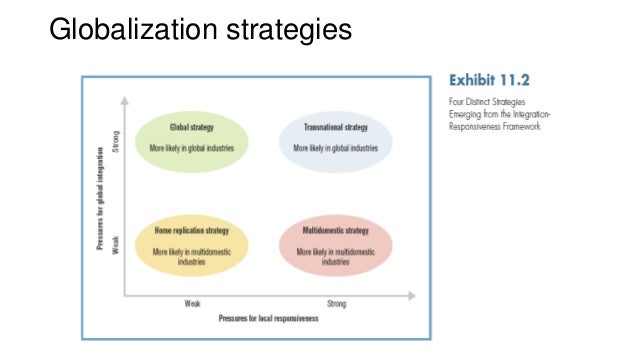
Yip’s Globalisation driver framework develops the concept of total global strategy and is much more useful than Porter’s global generic strategy framework as it evaluates both the overall degree of globalisation within an industry along with demonstrating the features of an industry which are more or less global naturally (Campbell et al, 2002). Yip also believes that his framework helps identify areas of an industry which are global and aspects of the industry which differ locally. Managers of businesses which are global should create their global strategy on the basis of the analysis made for the globalisation drivers (Campbell et al, 2002).
2.5.3 Porter’s Diamond Theory
Sustainable competitive advantage is needed in any business international strategy. When entering into a foreign market/country a business will be at a disadvantage so must have competitive advantages in order to overcome this issue (Johnson et al, 2008). This can be done as Tesco has been successful in many different markets such as Europe, Asia and the US. For a list of
countries which Tesco operate in and the year they first opened in that particular country see Table 2.
Porter’s Diamond theory explains how some businesses such as Tesco have a sustained competitive advantage in their industry when their competitors have not been as successful (Johnson et al, 2008) Tesco have more than ten years experience overseas due to their international strategy which contains six elements. These are to be flexible, act local, maintain focus, use multi formats, develop capability and build brands. This is the reason behind how they are able to sustain a competitive advantage and are the third largest supermarket worldwide (Tesco, 2008). Appendix 14 shows the determinants of national advantages using Porter’s Diamond theory.
3.0 Conclusion & Recommendations
From the findings of this report, there is evidence to suggest that Porter’s strategies are relevant in today’s grocery industry in relation to competitive positioning. These strategies which Porter uses relate to all types of industries and they help businesses to gain a competitive advantage as in the case of Tesco. By having these strategies in place it has allowed Tesco to gain this competitive advantage in the UK and overseas making them the third largest grocery retailer in the world. These strategies have been used successfully for over twenty years and will continue to be successful in the future.
At present the economy is in a recession, meaning that people are spending less and changing their behaviour and habits when it comes to shopping. However, Tesco try to assure their customers that they are about value so there is no need for them to shop anywhere else.
Growth is what Tesco believe in and even though the economy is in a recession they have planned and prepared longterm to expand and invest in the UK and internationally which will create up to 30,000 jobs. In recent recessions Tesco continued to invest which they believe is one of the best
things they have done and will continue to invest during this economic recession.
Ref erence s
Johnson et al (2008). Exploring Corporate Strategy, eight edition, Essex, Pearson Education Limited
Tesco (2008). Tesco PLC [Internet] Available from: http://www.tescoplc.com/
Leahy, T. (2008). Tesco Interim Results, 20082009: Full Interview [Internet] Available from: http://www.tescoplc.com/plc/ir/pres_results/results/r2008/sirterry_interview090
8/
Hall, J (2008). Tesco to be world number two by 2012 [Internet] Available from: http://www.telegraph.co.uk/finance/newsbysector/epic/tsco/3691672/tescoto bewor…
Get help with your essay today, from our professional essay writers!
Qualified writers in the subject of marketing are ready and waiting to help you with your studies.
Get help with your essay today
from our professional essay writers!
Visit www.ukessays.com to see how we can help you!
Campbell et al, (2002). Business Strategy: An introduction, Second Edition, Oxford, Elsevier ButterworthHeinemenn
Lynch, R (2003). Corporate Strategy, third edition, Essex, Pearson Education
Limited
Darling, J. (2001). Successful competitive positioning: the key for entry into the European consumer market, European Business Review, 13, (4), pp.209
220
Jenkins & Ambrosini (2002). Strategic Management: A multiperspective approach, Hampshire, Palgrave
Research Papers (2007). Porter’s Five Forces on Tesco. [Internet] Available from: http://www.oppapers.com/essays/Porters5ForcesTesco/108949
321 Books (2007). Porters Five Forces at Tesco PLC. [Internet] Available
from: http://www.321books.co.uk/catalog/tesco/portersfiveforces.htm
Hackney & Birtwistle (2006). The UK grocery business: towards a sustainable model for virtual markets, International Journal of Retail & Distribution Management, 34, (4/5), pp.354368
McNeilly, A (2008). Globalisation and the multinational Lecture Notes
[24.11.08]
De Wit & Meyer (2004). Strategy process, content, context, third edition, London, Thomson
Beaumont & Warman (2008). Can Tesco topple iTunes? [Internet] Available from: http://www.telegraph.co.uk/scienceandtechnology/3357071/cantesco
toppleitunes
The Grocer (2008). DFB 1st Grade targets gap in cheese market [Internet] Available from:
http://www.thegrocer.co.uk/articles.aspx?page=articles&ID=195740
Lassere, P (2007). Global Strategic Management, second edition, Hampshire, Palgrave
Inkpen & Ramaswamy (2006). Global Strategy, New York, Oxford University
Press Inc
Morris, T (2004). Tesco: a case study in supermarket excellence, New
Zealand, Corolis Research
Business Teacher (2008). Tesco Swot Analysis, [Internet] Available from: http://www.businessteacher.org.uk/businessresources/swotanalysis database/tescoswotanalysis/
Bib liog rap hic Ref erencing
Beaumont & Warman (2008). Can Tesco topple iTunes? [Internet] Available from: http://www.telegraph.co.uk/scienceandtechnology/3357071/cantesco
toppleitunes
Business Teacher (2008). Tesco Swot Analysis, [Internet] Available from:
http://www.businessteacher.org.uk/businessresources/swotanalysis
database/tescoswotanalysis/
Campbell et al, (2002). Business Strategy: An introduction, Second Edition, Oxford, Elsevier ButterworthHeinemenn
Darling, J. (2001). Successful competitive positioning: the key for entry into the European consumer market, European Business Review, 13, (4), pp.209
220
De Wit & Meyer (2004). Strategy process, content, context, third edition, London, Thomson
Hackney & Birtwistle (2006). The UK grocery business: towards a sustainable model for virtual markets, International Journal of Retail & Distribution Management, 34, (4/5), pp.354368
Hall, J (2008). Tesco to be world number two by 2012 [Internet] Available from: http://www.telegraph.co.uk/finance/newsbysector/epic/tsco/3691672/tescoto bewor…
Inkpen & Ramaswamy (2006). Global Strategy, New York, Oxford University
Yips Drivers Of Globalisation Tesco
Press Inc
Jenkins & Ambrosini (2002). Strategic Management: A multiperspective approach, Hampshire, Palgrave
Johnson et al (2008). Exploring Corporate Strategy, eight edition, Essex, Pearson Education Limited
Lassere, P (2007). Global Strategic Management, second edition, Hampshire, Palgrave
Leahy, T. (2008). Tesco Interim Results, 20082009: Full Interview [Internet] Available from: http://www.tescoplc.com/plc/ir/pres_results/results/r2008/sirterry_interview090
8/
Lynch, R (2003). Corporate Strategy, third edition, Essex, Pearson Education
Limited
McNeilly, A (2008). Globalisation and the multinational Lecture Notes
[24.11.08]
Morris, T (2004). Tesco: a case study in supermarket excellence, New
Zealand, Corolis Research
Research Papers (2007). Porter’s Five Forces on Tesco. [Internet] Available from: http://www.oppapers.com/essays/Porters5ForcesTesco/108949
Tesco (2008). Tesco PLC [Internet] Available from: http://www.tescoplc.com/
The Grocer (2008). DFB 1st Grade targets gap in cheese market [Internet] Available from:
http://www.thegrocer.co.uk/articles.aspx?page=articles&ID=195740
321 Books (2007). Porters Five Forces at Tesco PLC. [Internet] Available from: http://www.321books.co.uk/catalog/tesco/portersfiveforces.htm
Appendix 4
Competitive Advantage
Differentiation
Broad
Cost Leadership Differentiation
Asda Waitrose
Tesco
Competitive
Scope
Sainsbury’s
Cost Focus Differentiation Focus
M&S Delicatessens
Narrow
The Generic Strategy Framework. De Wit & Meyer, 2004 p. 262
Appendix 5
The Five Forces Framework
Potential entrants
Suppliers
Threat of entry
Competitive
Rivalry
Bargaining
Power
Bargaining
Power
Buyers
Threat of substitutes
Substitutes
Johnson et al, 2008 p.60
Appendix 6
SWOT analysis of Tesco
Strengths:
• Tesco within the global market place won retailer of the year award 2008.
this can drive advantage towards future growth and sustainability
• Although global retail sales are declining, Tesco Group have gained sales of 13% in the UK and 26% growth internationally
• As Tesco look to expand they have reserved funds of credit available
Weaknesses:
• Reduced profit margins can be the case of
Tesco’s position as a price leader in the UK
• Tesco Finance profit levels were caused through bad debt, credit card arrears and household insurance claims.
• Due to current economy at present, Tesco will suffer due to the cost of living and lower disposable income
Opportunities:
• Statistics show that economies of scale can be gained through buying power, which is why Tesco are the third largest global grocer
• Due to the acquisition in Asia there is opportunity for further growth internationally
• Further growth and development will be made with Technology
Threats:
• The ‘credit crunch’ has affected the UK and American markets so Tesco will focus on lower priced products
• WalMart who are world leaders put persistent threats of takeover on Tesco
• Products areas may need to be evaluated due to changes in consumer buying
• profit margins may be affected by the rise in raw materials
Business Teacher (2008). Tesco Swot Analysis, [Internet] Available from: http://www.businessteacher.org.uk/businessresources/swotanalysis database/tescoswotanalysis/
Appendix 7
Sustaining competitive advantage
PriceBased strategies
• Accept reduced margin
• Win a price war
• Reduce Costs
• Focus on specific segments
Differentiation
• Create difficulties of imitation
• Achieve imperfect mobility
(of resources/competences)
• Reinvest margin
Sustaining Competitive Advantage
Lockin
• Achieve size/market dominance
• Firstmover advantage
• Reinforcement
• Rigorous enforcement
Johnson et al, 2008. p. 225
Appendix 8
The Strategy Clock: Competitive strategy options
High
Perceived product/service benefits
Low
Price 2.
Hybrid
3.
Differentiation
4.
Focused
Disclaimer: All contents are copyrighted and owned by their respected owners. The media files you download with Mp3take must be for time shifting, personal, private, non commercial use only and must remove the files after listening. Mp3take is file search engine and does not host music files, no media files are indexed hosted cached or stored on our server, They are located on third party sites that are not obligated in anyway with our site, Mp3take is not responsible for third party website content. Ye hasi wadiya yeh khula aasman song free download. It is illegal for you to distribute or download copyrighted materials files without permission.
Differentiation
5.
6.
1.
‘No Frills’
7.
Strategies destined
8. for ultimate failure
Low
Low High
Price
Needs/risks
1. ‘No frills’ Likely to be segment specific
2. Low Price Risk of price war and low margins; need to be cost leader
3. Hybrid Low cost base and reinvestment in low price
and differentiation
4. Differentiation
a) Without price premium Perceived added value by user, yielding market share benefits
b) With price premium Perceive added value sufficient to bear price premium
5. Focused differentiation Perceived added value to a particular segment, warranting price premium
6. Increased price Higher margins if competitors do not follow;
risk of losing market share
7. Increased price/ low value Only feasible in monopoly situation
8. Low value/ standard price Loss of market share
Appendix 9
Target market selection
Differentiation
Market Segmentation Tailored marketing mix
Opportunities and threats
Jobber, 2004 p, 275
Appendix
Firm Infrastructure
Support
Activities
Human Resource M
Disclaimer: This work has been submitted by a student. This is not an example of the work produced by our Essay Writing Service. You can view samples of our professional work here.
Any opinions, findings, conclusions or recommendations expressed in this material are those of the authors and do not necessarily reflect the views of UK Essays.
There are four industry drivers: market drivers, cost drivers, government drivers and competitive drivers Yip 1992. Market drivers are customer needs and tastes become more common, the existence of global customers and transferable marketing between difference countries. Costs drivers are scale economies, favourable logistics, and country specific differences. Government drivers are numerous and include eliminate all tariff and non tariff barriers, liberalise trade policies, subsidies outlawed, ownership restrictions and technical standards compatible for all industries. Competitive drivers are competitors’ global strategies and country interdependence. Yip’s globalisation drivers on various industries are shown in table 3 of appendix 2. No other industry is more international than civil aviation industry which ranks first out of twelve industries in market and competitive globalisation drivers and second for cost globalisation drivers. The graph shows the airline and retail business are affected differently by the drivers. Market, cost and competitiveness drivers cause the airlines business to go for high globalisation. Government driver plays a key role on the domestic products.
Barriers to Globalisation
Governments impose legal and regulatory barriers can hinder the flow of goods and services and the movement of capital and people. Many states still maintain numerous tariffs on imports of goods due to various reasons. Developed countries impose particularly high tariffs on goods coming from underdeveloped countries. Subsidies can take the form of financial grants and tax concessions and are often given to protect domestic firm from foreign competitions such. In Japan, the government protects the farmers’ interest through various rules and regulations. The western countries impose an embargo on high technology transfer to communist countries including China. Control on Capital in China and many other undeveloped countries can take the form of either controls on inflows or outflows of foreign direct and indirect investment. Government department, nationalized industries and public utilities often spend large amounts of public money purchasing goods and services. In the tendering process, government will often favour domestic companies over their foreign rivals even when domestic firms are less capable and more expensive. Border controls affect trade in goods. Exporter and importer may require filling in export/import forms. The customs officers may stop vehicles and check goods at the frontier. This will take time and add additional cost to traders’ transport thus make goods less competitive in the foreign market. Many barriers remain to the movement of professionals and lobour force. Technical standards, operation licenses and regulations can be formidable barriers. There are thousands of different technical specifications relating to goods and services which can effectively protect domestic markets from foreign competition and consequently restrict trade.
Drivers against Barriers
Globalisation involves the fusion of economic, cultural, political, and physical between nations and countries. There are historically barriers between countries due to geographical distance, cultural and ideology difference, and national interest. Globalisation promotes mutual reliance between countries through all forms of drivers such as the cost drivers, government deregulation, mutual recognition of technical standards and qualifications. If drivers diminish, the barriers will become larger. After China entered the WTO in 2000, the government drivers effectively change the policies and regulations to enable the free trade and investment.
Get help with your essay today, from our professional essay writers!
Qualified writers in the subject of economics are ready and waiting to help you with your studies.
Get help with your essay today
from our professional essay writers!
Visit www.ukessays.com to see how we can help you!
Conclusions
China is the emerging force in today’s business world and its domestic market bears huge growth potential for Tesco. Tesco is competing with others multinational companies such as Wal-Mart and Carrefour. The retail industry is not considered to be a prestigious industry by the Chinese government and is therefore not sanctioned like the state owned infrastructure and heavy industry sector. Local government would like to upgrade the city image by closing down some of the street wet markets. As Chinese getting wealthier, they are looking for better quality goods, services and good brand names. Foreign-funded retailers can normally meet the expectation of the younger generation. After knowing the macro environment of China, Tesco can formulate its China market strategy. Tesco can find a partner with local knowledge and deploy stores in major cities, and then gradually expand towards the second and third-tier cities. Domestic supermarkets mostly start in a central region, and then radiate towards the periphery areas. For example, Lianhua started in Shanghai, Better-Life in Hunan and Jiangxi, Meet-All in Shanxi, Wu-Mart and Jingkelong in North China and New Huadu in Fujian respectively.
In the coming China’s twelfth five-year plan, the annual GDP growth is expected to be 7-8%. Along with China continue to reform under the new leadership and increasing people’s income, the development of China’s supermarket industry will have the following trends in the future:
Firstly, other than the first-tier big cities (Beijing, Shanghai and Guangzhou), the second-tier and third-tier cities (Chongqing, Xian, Tianjin and Chengdu) will have a faster growth rate,
Secondly, the suburbanisation of big cities will promote the growth of the suburban supermarket market. The urban expansion and population growth will expand the urban surrounding areas, thus the centre of retail industry will proliferate to suburb from downtown.
Thirdly, the focus of supermarket operation will shift from just selling goods to service quality. Along with the continuous increase of consumer’s income, the expectation and demand for consumables will have great changes. Besides quality and price, consumers will pay more attention to factors such as brand name, convenience and shopping experience. Furthermore, the quality of commodities provided by various supermarkets will have a dwindling gap, so the competition of the supermarket industry in the future will focus more on the service level.
The civil aviation industry ranks highest for market globalisation drivers because end users in different countries have the same needs for the products and the customers search the entire world for suppliers. The major players of the civil aero engine are Pratt & Whitney, General Electric, CFM International and Rolls Royce. Competitive globalisation drivers are high. Cost globalisation drivers in aero engines industry is rank high because of huge development cost and one single national market is not enough to pay back the investment.
By 2030, China will need more than four thousand aeroplanes. Aero engine is one of the essential components installed on the aeroplane. As in the foreseeable ten years, China is still unable to produce the national civil aero engines for commercial usage. Rolls Royce should formulate its China’s market short, medium and long term strategy to catch the business opportunity. Short term strategy should include setting up of marketing and after sale support office in Beijing. Medium term is to set up maintenance repair shop in China to provide better support and reduce the maintenance cost. In China twelfth five year plan, China plan to invest RMB100M to develop a national aero engine. The Chinese Authority is seeking foreign partner and international collaboration. Rolls Royce medium term strategy can be working with the Chinese partner on licensed production of Rolls Royce engines to power the Chinese aircraft. For the long term strategy, Rolls Royce can entered into international collaboration with the Chinese partner in the design, development and production of advanced commercial aero engines.